Email:info@weisho.com
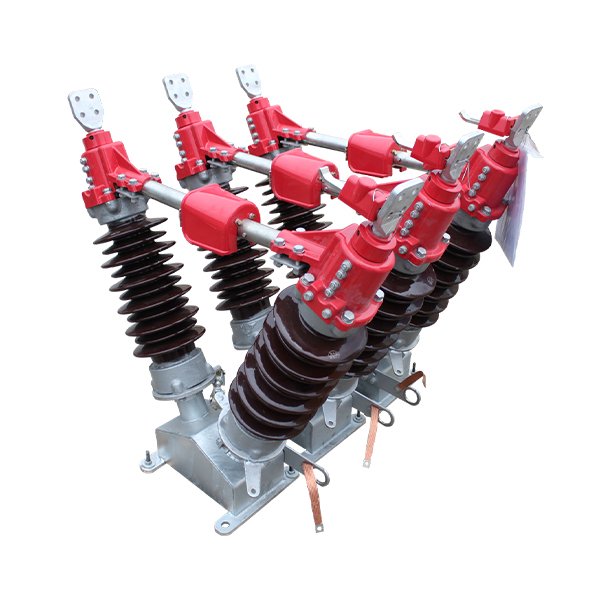
Disconnecto Switch Manufacturers
WEISHO is a professional manufacturer of Disconnector and Isolator Switches, providing reliable solutions for medium and high voltage power distribution systems. Our products are manufactured under strict quality control and supported by an integrated supply chain to ensure consistent performance and cost efficiency. We also offer OEM manufacturing and customized solutions to meet diverse project requirements and international standards.
What are our characteristics
Production technology
Adopting industry-leading manufacturing processes, continuously optimizing production processes, and improving efficiency and accuracy
Customization and OEM/ODM
Supports OEM/ODM services and can provide customized solutions according to your needs, including rated current, brand identification, etc
High performance-price ratio
Efficient production and strong supply chain management ensure high quality and low prices, reducing customer procurement costs
Long term partnership
Putting customers at the center, establishing long-term stable cooperation, and assisting in the growth of customer business.
Customizable Disconnector Switch
Explore our extensive range of Disconnector and Isolator Switches, designed for medium- and high-voltage power distribution systems and professional applications. We provide comprehensive solutions for safe electrical isolation, ranging from standard configurations to customized designs tailored to meet project-specific requirements.:
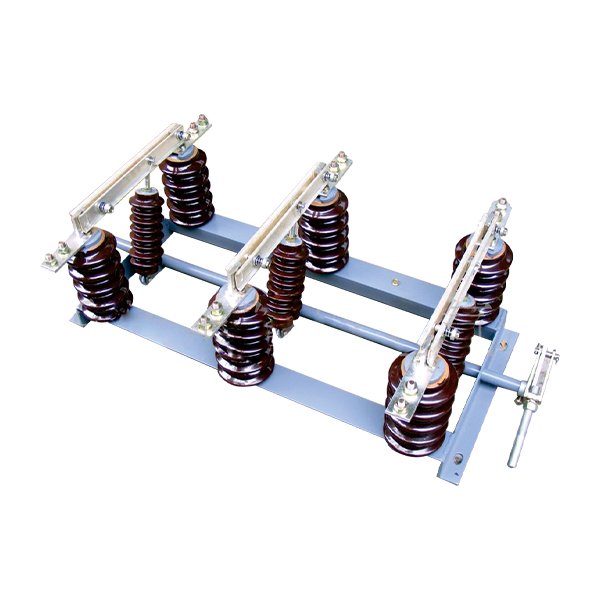
GW1-10 Outdoor Disconnector Switch
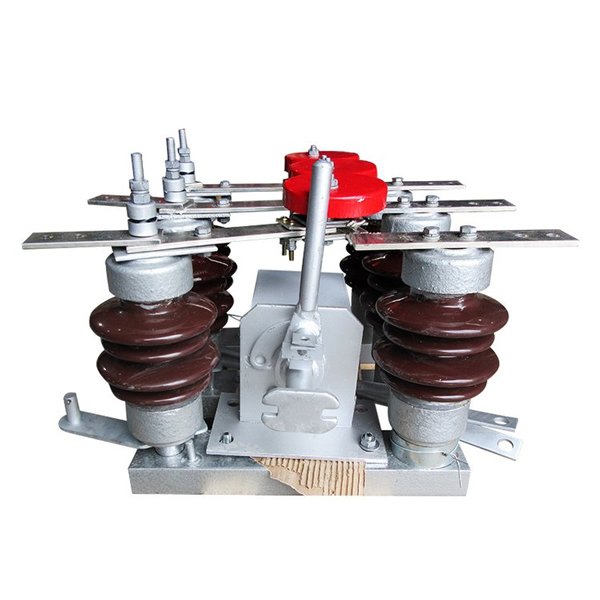
GW4-10 Outdoor Disconnector Switch
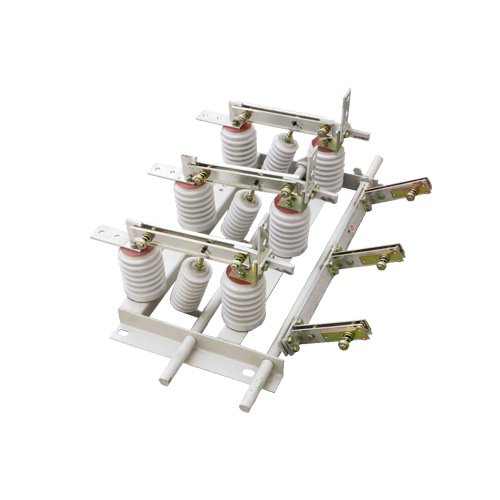
GN24-12D 12kV Indoor Disconnector Switch
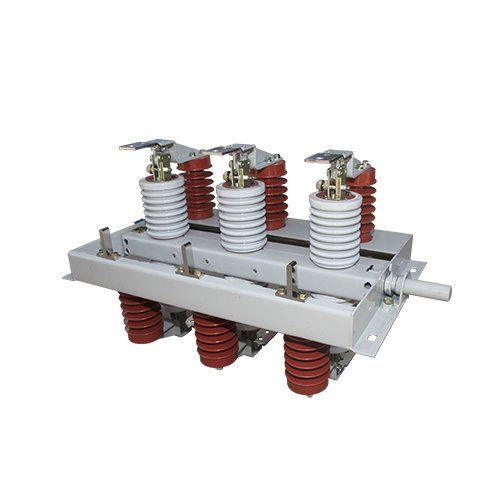
GN30-12 Indoor Disconnector Switch
A brief introduction
WHY CHOOSE US
- Every disconnector and isolator switch undergoes rigorous routine and type testing to ensure compliance with international standards and reliable operation.
- Premium conductive and insulating components are used to ensure long service life, mechanical durability, and stable performance.
- Our engineering team continuously optimizes product design to improve electrical isolation performance, operational reliability, and safety.
- Our disconnector and isolator switch products are designed and tested in accordance with IEC standards and relevant international certification requirements.
- We provide professional support from product selection and technical consultation to installation guidance and after-sales service.
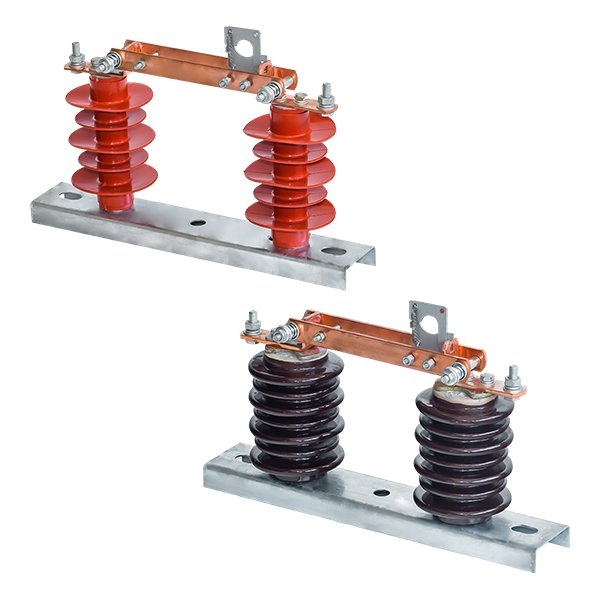
Why choose an Disconnector Switch?
Disconnector switches (also known as isolators) are crucial components in electrical distribution systems, providing a visible break in the circuit to ensure safety during maintenance or repair. They are designed to isolate equipment and sections of the network, preventing accidental energization and ensuring personnel safety. Here’s why a disconnector switch is the reliable choice for safe and efficient electrical system operation.
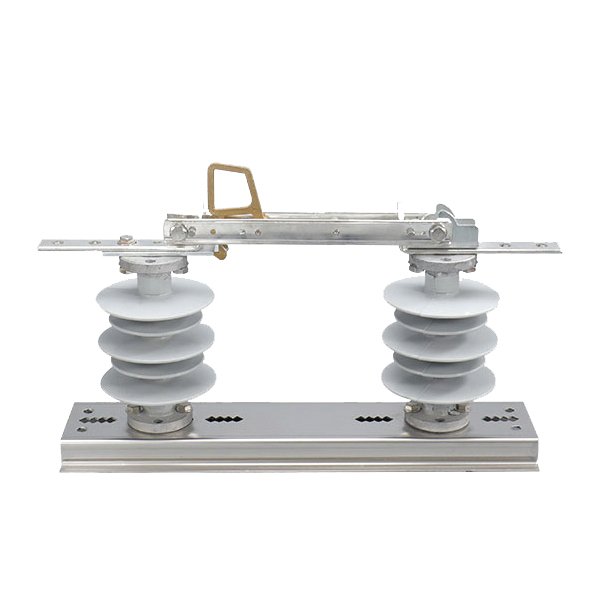
Safe and Reliable Isolation
Disconnector switches provide a visible break in the circuit, ensuring that sections of the electrical system can be safely isolated during maintenance or repair. They enhance safety for personnel and protect equipment by preventing accidental energization.
- Clear visible isolation
- Easy operation and maintenance
- Durable and reliable under various environmental conditions
Advanced Safety Features
Disconnector Switch is equipped with advanced safety features that help mitigate electrical operation risks and enhance operational safety.
- Visible Break Design
- Enhanced Insulation Structure
- Misoperation Interlocking Device
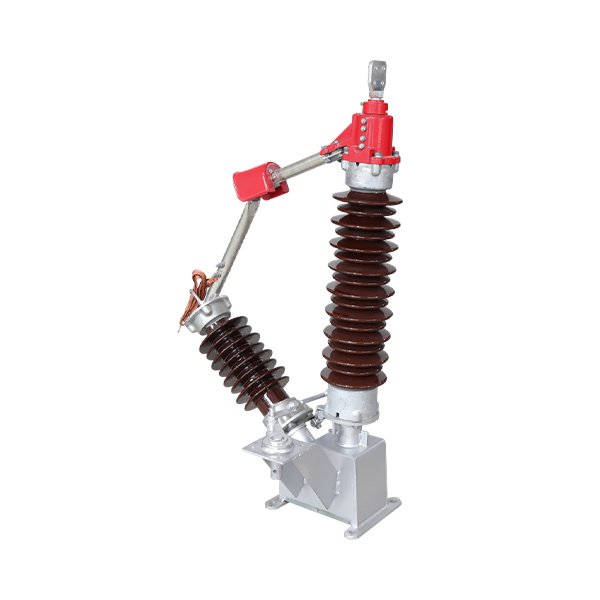
Versatile Applications
Disconnector Switches are widely applied in various electrical systems for safe circuit isolation, serving as a critical component in scenarios requiring reliable de-energization.
- Power distribution networks
- Industrial electrical installations
- Substation equipment maintenance
Cost-Effective Solution
Deploying disconnector switches offers a cost-efficient option for electrical systems, as their design prioritizes long-term reliability with minimal operational overhead.
- Robust mechanical structure
- Low maintenance requirement
- Extended service life
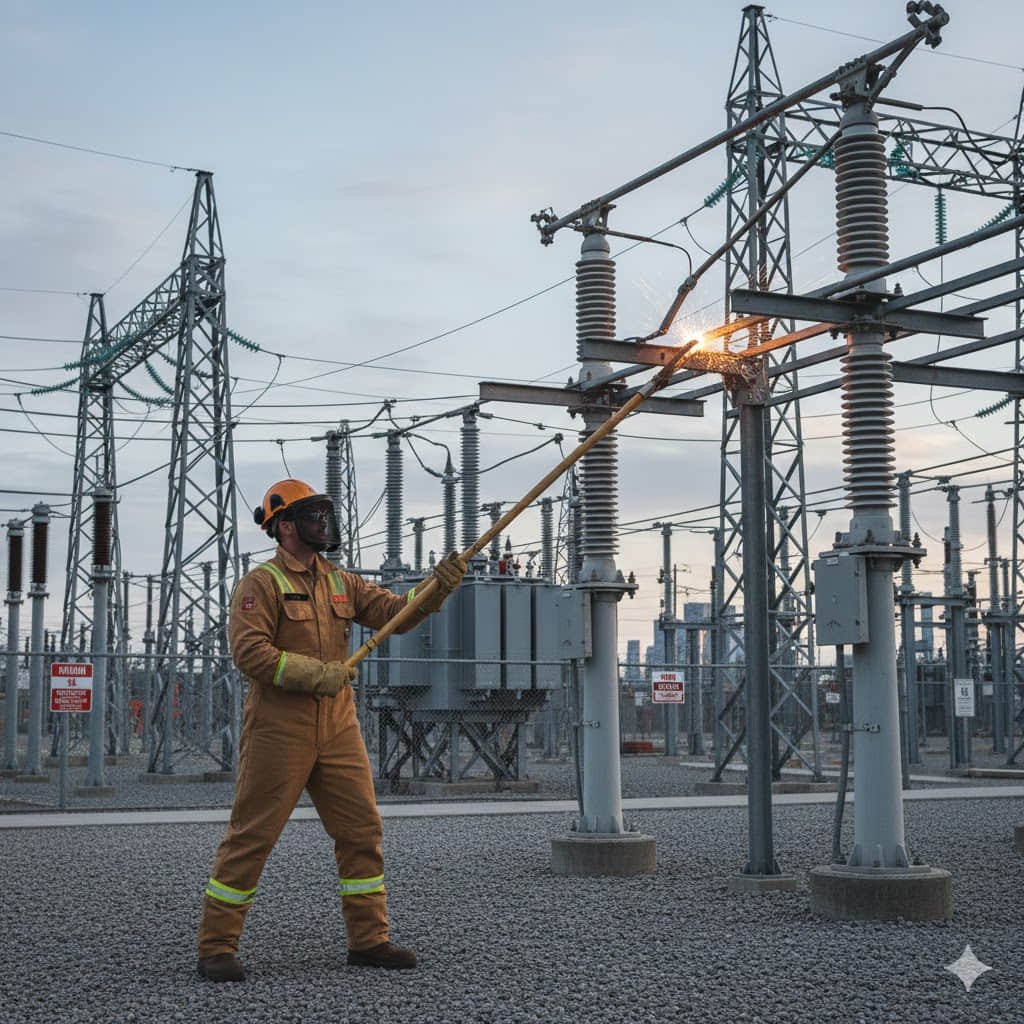
The advantages of our product
Reliable Isolation Performance
Features a clear electrical break, enabling reliable isolation of live circuits to ensure maintenance safety, suitable for isolation scenarios across various voltage levels.
Simple & Stable Structure
No complex electronic components, ensuring high operational stability. Compatible with frequent switching operations, reducing failure risks.
Long mechanical lifespan
Using wear-resistant materials and optimized design, the mechanical life can reach 50000+ cycles, far higher than traditional disconnector switches.
Low maintenance cost
No special maintenance (e.g., oil medium) required. Simplified structural design reduces maintenance frequency and lowers operation & maintenance costs.
Strong environmental adaptability
Resistant to harsh environments (e.g., extreme temperatures, humidity). Rated voltage up to AC1200V, meeting the needs of multi-scenario power distribution systems.
Brand reputation
Through authoritative certifications such as ISO, IEC, UL, etc., it has been widely used in the global market with guaranteed quality and after-sales support.
Get Your Customized Quotation!
We provide customized solutions. Tell us your needs for a precise quote.
Not just a Disconnector Switch Manufacturer
We not only produce disconnector switches, but also offer a range of customized value-added services to meet your project needs. We are committed to pursuing excellence, ensuring that every customer receives personalized attention, expert guidance (e.g., isolation scheme design, installation matching), and seamless support throughout the entire process of working with us.

Service Consultation
Whether your disconnector switch requirements are for basic isolation scenarios or complex power distribution projects, our team can provide professional advice and technical consultation. For high-difficulty projects, we offer in-depth engineering support to ensure the selection of the most suitable disconnector switch models and isolation scheme solutions.
Product Recommendations
Not sure which disconnector switch fits your system? Our experts will provide free customized advice based on your specific operational scenarios (e.g., voltage level, isolation frequency) and environmental requirements, ensuring the product aligns with your electrical isolation safety needs.

Service Consultation
If you lack a reliable freight forwarder, we can arrange transportation from the factory to the project site at no additional cost. Our logistics team ensures timely and safe delivery, keeping your power system maintenance or construction projects on schedule while minimizing delays.
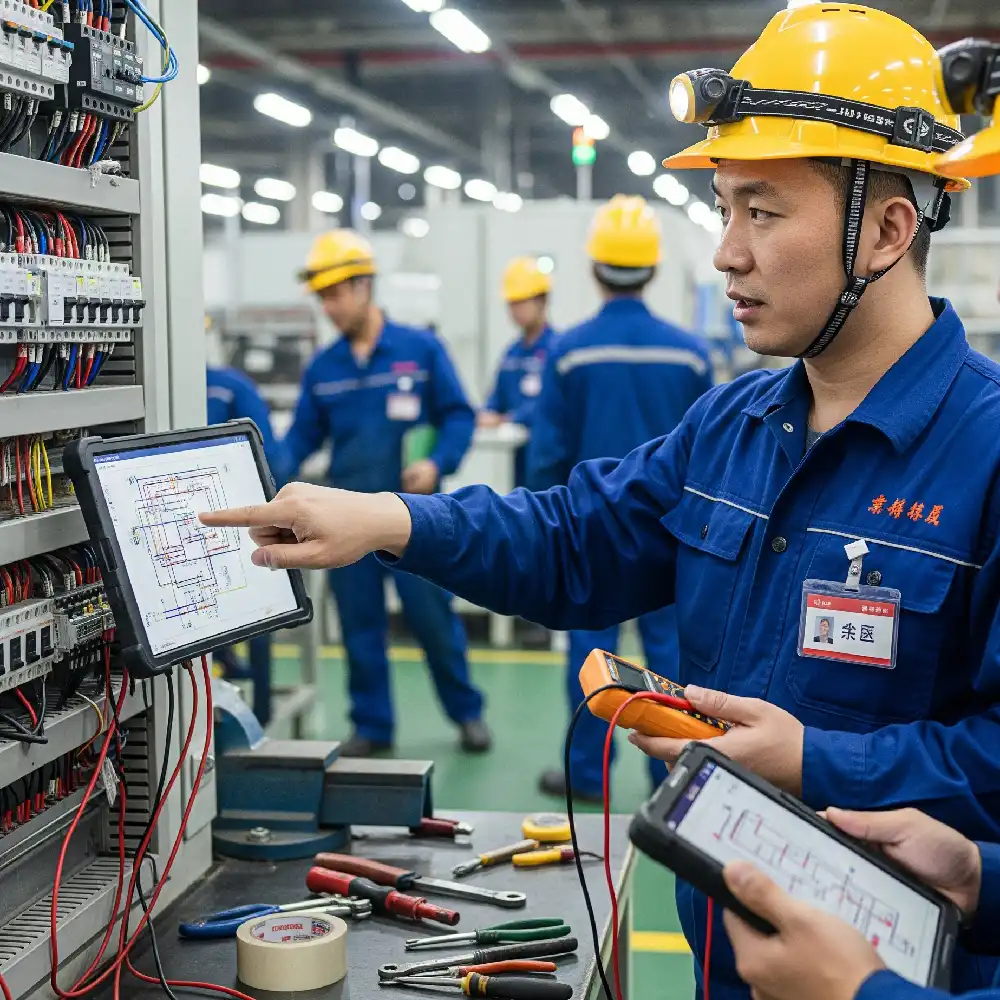
Installation Support
For disconnector switch installation, our professional team provides on-site guidance (including correct isolation operation specifications and safety protection measures) to ensure the equipment is installed properly and meets electrical safety standards.
What are our clients saying
Don’t just believe what we say! Take a look at the satisfied customers’ evaluations of disconnector switches.
“The disconnector switches have significantly enhanced the safety of our electrical maintenance work—their clear break design lets us confirm isolation status at a glance.”

John Doe
Electrical Engineer
“These disconnector switches are incredibly user-friendly; their stable operation and simple structure make them perfect for our regular power system isolation needs.

Tom Johnson
Facilities Technician
“We rely on these disconnector switches for their durability—they’ve held up perfectly through frequent daily operation cycles, giving us total peace of mind.”

James Brown
Power Distribution Supervisor
“Since switching to these disconnector switches, our maintenance costs have dropped noticeably, and their reliable performance has minimized system downtime.”

Maria Smith
Plant Operations Manager

WEISHO employs the most advanced production equipment and precise testing methods at all times, providing a solid guarantee for the company’s product manufacturing and quality inspection.
All products of the entire series have undergone strict environmental and electrical tests.
At the same time, the company has obtained ISO9001 quality management system and ISO14001 environmental management system certifications.
♥Wide selection
♥OEM Quality
♥100% Satisfaction Guarantee
Looking forward to working with you
Your trusted electrical equipment supplier
FAQ
Learn more about Disconnector Switches through these frequently asked questions.
What is a Disconnector Switch?
A disconnector switch (also called an isolator) is an electrical device designed to safely isolate a circuit or equipment from its power source. It provides a visible, physical break in the circuit to confirm de-energization, which is critical for maintenance and safety.
How do Disconnector Switches work?
Disconnector switches operate via a mechanical mechanism (e.g., rotating blade, sliding contact) to create an air gap between live components. This gap ensures no current flows through the isolated section, allowing safe access to downstream equipment. They cannot interrupt load current—they must only be operated when the circuit is already de-energized (e.g., by a circuit breaker).
Why use Disconnector Switches?
They are essential for electrical safety: they enable reliable isolation of equipment during maintenance, prevent accidental energization, and provide a clear visual indication of a circuit’s off state. They also support system flexibility by allowing sections of a power network to be separated for repairs or reconfiguration.
What are the components of a Disconnector Switch?
Typical components include: an insulating frame (to separate live parts), contact elements (blades/terminals for circuit connection), an operating mechanism (handle/gear for switching), and interlocking devices (to prevent incorrect operation, e.g., opening under load).
How often should Disconnector Switches be tested?
Testing frequency depends on usage and standards (e.g., IEC, IEEE):
- Visual inspections: Quarterly (check for damage, loose connections).
- Mechanical operation tests: Annually (verify smooth switching and contact alignment).
- Electrical insulation tests: Every 3–5 years (measure dielectric strength to ensure isolation performance).
Can Disconnector Switches be used in residential applications?
Disconnector switches are rarely used in standard residential setups (residential systems typically use circuit breakers for isolation). However, they may be installed in large residential properties (e.g., estates) for isolating specific high-power sections (e.g., pool equipment, backup generators) during maintenance.
What maintenance do Disconnector Switches require?
- Routine maintenance includes:
- Cleaning contact surfaces (to prevent oxidation and poor conductivity).
- Lubricating the operating mechanism (to ensure smooth switching).
- Inspecting interlocks (to confirm they function correctly).
- Tightening terminal connections (to avoid overheating).
No complex electronic maintenance is needed, as they have no sensitive control components.
Are Disconnector Switches environmentally friendly?
Most disconnector switches are environmentally friendly: they use durable, recyclable materials (e.g., metal, ceramic insulation) and require no hazardous substances (e.g., oil, chemicals) for operation. Their long lifespan also reduces waste from frequent replacements.
What sizes do Disconnector Switches come in?
They are available in sizes matching various voltage and current ratings:
- Low-voltage (LV): Up to 1000V, 16A–6300A (for distribution panels, industrial equipment).
- Medium-voltage (MV): 1kV–36kV, 630A–4000A (for substation, power line isolation).
- High-voltage (HV): Above 36kV (for transmission network applications).
Sizes also vary by physical dimensions (e.g., compact models for panel mounting, large outdoor units for substations).
Do Disconnector Switches have a warranty?
Most manufacturers offer a 1–2 year warranty covering defects in materials and workmanship. For industrial/utility-grade models, extended warranties (3–5 years) may be available, often contingent on proper installation and adherence to maintenance guidelines.