
Email:info@weisho.com

Keeping your home safe starts with basic electrical safety and simple habits. An overload occurs when a branch carries too much current, which can heat wires, melt insulation, and spark a fire. Learning the basics helps you act early and protect your system.
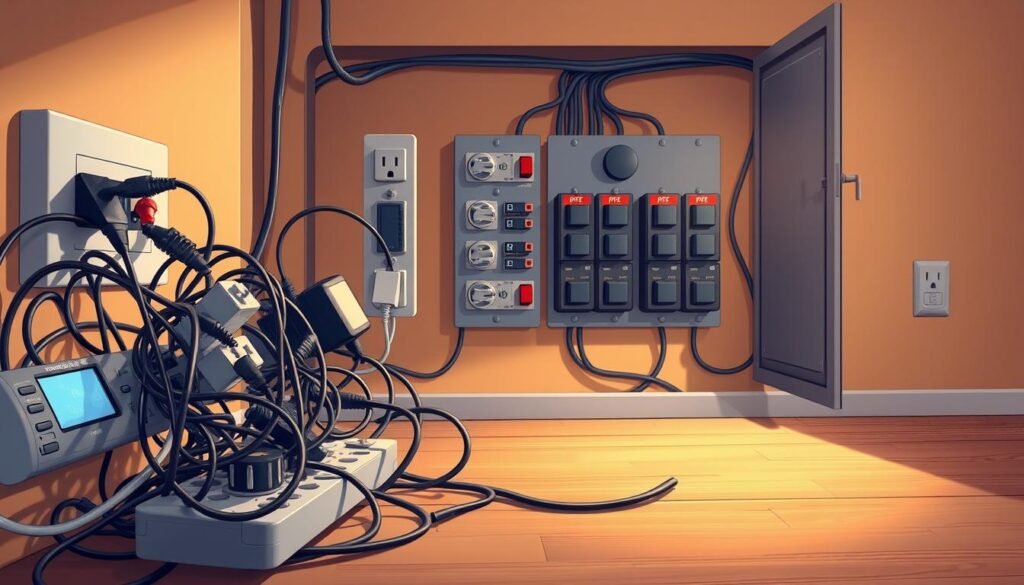
Begin by reading the breaker box labels and mapping circuits. Aim to use about 80% of a circuit’s rating: roughly 12A on a 15A circuit, 16A on a 20A circuit. Major appliances need direct wall outlets; power strips add outlets but not capacity.
Watch for warm plates, discoloration, buzzing, sparks, burning smells, or frequent trips. These warning signs mean call a certified electrician. This guide offers clear steps and practical tips you can use now to prevent electrical problems before they become fires.
Why electrical overloads happen and why they matter today
Every home circuit has a rated limit; pushing past it creates heat and risk. Exceeding capacity causes conductors and wires to warm, which can melt insulation and promote arcing. That heat buildup raises the chance of electrical fires in walls, ceilings, and concealed spaces.
What an overload means in a 120-volt branch
A typical 120-volt branch serves receptacles and lights on a 15–20A general-purpose circuit. Adding several high-watt devices on the same circuits can quietly push demand past safe limits. A simple safety rule: aim for about 80% of rated capacity during continuous use (about 12A on 15A, 16A on 20A).
How breakers, AFCIs and GFCIs protect you — and their limits
Circuit breakers trip when current exceeds a safe threshold, interrupting overcurrent. AFCIs reduce arc risks; GFCIs cut ground-fault shocks. These devices provide vital protection, but they do not replace good load management. Heat can build before a trip, and repeated trips may signal deeper wiring problems.
- Fixed capacity: more outlets do not increase available power on a circuit.
- Every added heater, hair dryer, or cooker can push a branch closer to its limit.
- Treat protection devices as last-line defense and plan loads proactively.
| Device | Primary function | Limitations |
|---|---|---|
| Standard breaker | Stops sustained overcurrent | May allow heat buildup before tripping |
| AFCI | Detects arcing faults | Does not manage load distribution |
| GFCI | Protects against ground faults | Not a fire prevention device |
Map your home electrical system before you plug in
A quick tour of your panel gives the best starting point for organizing room outlets and loads. Start at the breaker box and read labels that list maximum amperage and the areas each breaker serves.
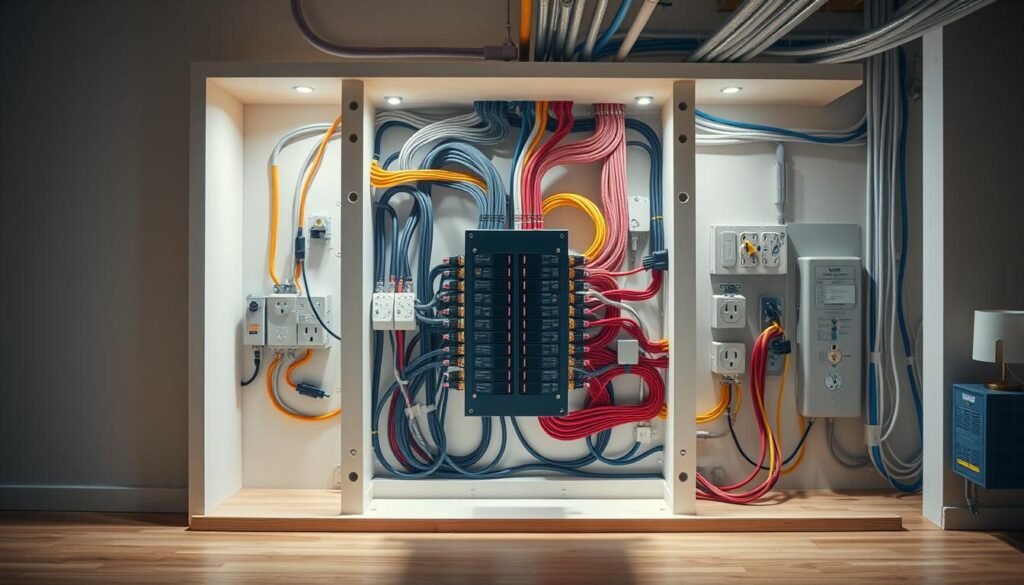
Reading your panel: 15A vs. 20A branch circuits and labeling
Most general-purpose branches are 15A or 20A. Look for small numbers on the breaker handle; 15 means a lower-capacity branch than 20. Higher-capacity breakers usually feed large appliances.
Safely identifying which outlets and lights share a circuit
Follow this safe tracing method when mapping circuits:
- Turn lights and unplug devices in the area, then flip one breaker off at a time.
- Test each outlet and light in the room after each toggle to see which are controlled.
- Keep hands dry, stand on a dry surface, and use a helper for better visibility and security.
Label each breaker with durable tape and clear writing. Note room names and any fixed loads, like a microwave or disposal. Capture your map with a photo or spreadsheet so you can plan which outlet and lights can host high-draw devices.
| Action | Why it matters | Quick result |
|---|---|---|
| Read breaker amp rating | Shows how much current a circuit can carry | Plan loads using the 80% guideline |
| Toggle one breaker at a time | Identifies grouped outlets and lights | A clear map of which rooms share a circuit |
| Label and photograph panel | Makes future checks faster and safer | Consistent labels that match reality |
| Mark dedicated appliance circuits | Prevents accidental use of general branches | Reduced chance of tripping and heat build-up |
Finally, make sure you keep continuous loads around 80% of each breaker rating—about 12A on 15A and 16A on 20A circuits. Use your mapped panel as a simple plan for safer use of outlets across your home.
Calculate safe electrical load the smart way
Simple math and a short checklist help you balance loads across your home wiring. Use a quick amp estimate before plugging in high-draw items. That keeps each circuit within safe capacity and lowers chance of nuisance trips.
Watt-to-amp math: divide watts by 120 volts
Current (amps) = watts ÷ 120 volts. This quick formula shows the actual draw of a device and the strain it places on a circuit.
The 80% rule for continuous load on 15A and 20A circuits
Plan continuous use near 80% of breaker rating. For example, keep ongoing draw around 12A on a 15A circuit and 16A on a 20A branch.
Practical load balancing: stagger high-watt appliances
Staggering reduces simultaneous demand. Wait for the coffee maker to finish before running a toaster, or move a heater to another room with its own circuit.
| Appliance | Typical watts | Approx amps (÷120V) | Suggested grouping |
|---|---|---|---|
| Toaster | 1200 | 10 | Kitchen small-appliance circuit |
| Microwave | 1200 | 10 | Dedicated kitchen circuit if available |
| Space heater | 1500 | 12.5 | Separate room circuit |
| Coffee maker | 900 | 7.5 | Stagger with toaster |
Use a short worksheet: list devices, convert watts to amps, then sum. Test combinations slowly and watch for dimming or trips. These simple tips keep your electrical system cooler and extend equipment life while improving home safety.
Overloaded electrical outlets: warning signs you shouldn’t ignore
Small sensory cues around outlets often point to hidden wiring problems. Spotting signs early reduces risk and limits damage. Take quick, safe steps when you notice anything unusual.
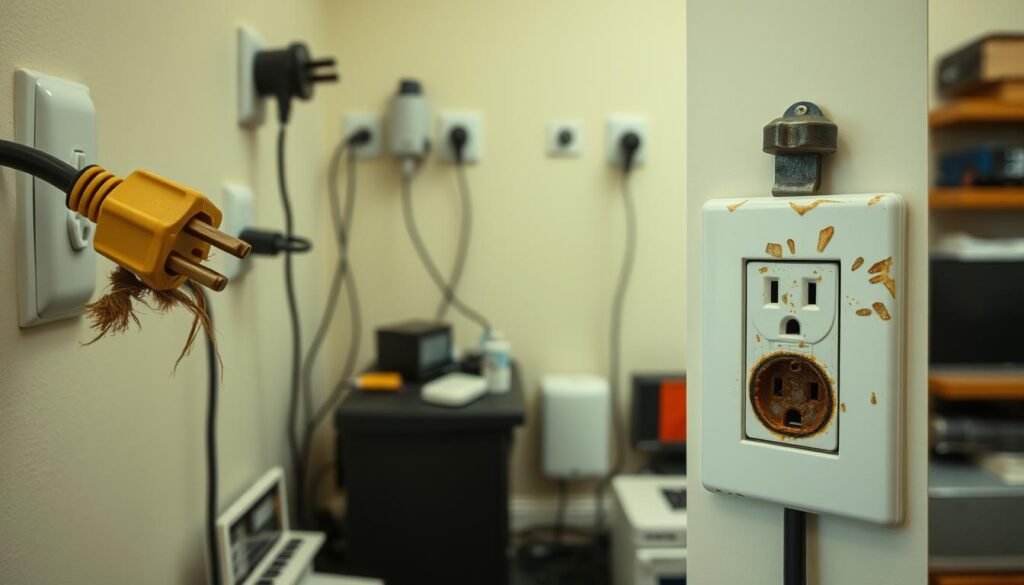
Heat, discoloration, odors, and sounds from outlets and switches
Warm wall plates, darkened faces, or a faint burning smell are immediate red flags. Any sizzling, buzzing, or crackling noise suggests loose terminations or arcing inside the box.
Tripping breakers, dimming lights, and underpowered devices
Frequent trips, flickering lamps, or appliances that struggle are performance clues. These signs often mean the branch is near its power limit or has a wiring fault.
Immediate steps to take and when to stop using a circuit
- Unplug nonessential devices from the affected outlet and nearby receptacles.
- Do not keep resetting the breaker; repeated trips mean a deeper problem.
- Cease use if you feel a tingle, see sparks, or notice visible damage.
- Document the timing and exact signs so an electrician can diagnose faster.
| Symptom | Likely cause | Action |
|---|---|---|
| Warm plate or discoloration | Loose contacts or high heat | Stop use and call a professional |
| Buzzing or crackling | Arcing in wiring or receptacle | Unplug devices and schedule inspection |
| Frequent breaker trips | Excess load or short circuit | Redistribute loads and check circuits |
Use extension cords, power strips, and surge protection safely
Power strips and portable cords add reach and convenience, but they do not raise the amount of power a branch can deliver. Treat strips as temporary helpers, not permanent solutions for many devices on one circuit.
Plug high-heat appliances like space heaters, toasters, and hair dryers directly into a wall outlet. Doing so reduces resistive heating at plugs and lowers the chance of electrical fires.
- Do not daisy-chain strips or extension cords; stacking concentrates heat and defeats built-in protection.
- Pick cords rated for the intended load and environment. Use outdoor-rated jackets for exterior runs.
- Limit how many devices share one strip and space bulky adapters to avoid strain on the outlet and plugs.
Inspect cords regularly. Make sure there are no frays, melted spots, cracked plugs, or missing ground pins. Replace any damaged cord immediately.
| Item | When appropriate | When not appropriate |
|---|---|---|
| Power strip | Protecting lamps or chargers | Running a heater or toaster |
| Extension cord | Short-term reach for tools or vacuums | Permanent wiring substitute |
| Surge protector | Safeguarding computers and TVs from spikes | Protecting heavy-duty appliances or stopping overload |
| Outdoor-rated cord | Yard tools, lights, inflatables | Indoor-only cords used outside |
Surge devices help sensitive electronics, but they do not manage total branch power. The best way to prevent electrical incidents is sensible load planning, routine inspections, and replacing old or low-quality strips with certified models.
Holiday lights and seasonal loads: reduce risk without losing cheer
Seasonal displays can boost curb appeal, but they also add meaningful load during peak evenings.
Switching strings to LED lights cuts wattage and runs cooler. LEDs lower energy use and reduce fire risk while keeping displays bright. Use quality timers so sections run at different hours. Staggered runtimes prevent simultaneous peaks and save energy.
For outdoor setups, pick weather-rated extension cords and keep connections tight and off wet ground. Secure cords and keep them away from heat and foot traffic to avoid abrasion and moisture damage. Surge protection can guard controllers, but balanced wiring remains the main safety control.
Retire decorations that show clear signs of damage: exposed copper, cracked sockets, persistent flicker after bulb swaps, heat in plugs, discoloration, or any burning smell. If displays trip breakers often, segment sections across different circuits and test each part before full use.
| Item | Typical watts | Recommended action |
|---|---|---|
| LED string | 5–60 | Use widely; low energy and heat |
| Incandescent string | 200–600 | Replace with LEDs or limit runtime |
| Inflatable with motor | 50–200 | Place on separate circuit; test runtime |
| Controller or timer | 5–30 | Use surge device for protection |
Quick tips: record total wattage per segment, keep overall draw under the 80% margin for each circuit, and call a professional if damage appears or trips persist. These steps keep your home bright and safer all season.
How to avoid socket overload and electrical hazards in wet or high-risk areas
A small splash can turn a safe plug into a serious shock risk; treat wet areas as priority zones. Wet conditions greatly increase shock risk because moisture provides a path for electricity. That can energize metal parts and reach people faster than in dry rooms.
GFCIs near sinks, basements, garages, and outdoors
Install or test GFCIs in bathrooms, kitchens, basements, garages, and on outdoor outlets. These devices cut power within milliseconds during ground faults and reduce injury risk by interrupting current flow.
Keep distance from conductive and flammable environments
Keep cords and outlet connections off damp floors and away from metal surfaces that can conduct current if a fault occurs. Do not run devices where flammable vapors or dust collect; even small sparks can ignite fumes.
- Close cabinet doors and cover junction boxes and panels so moisture and debris cannot enter.
- Use weatherproof, in-use covers and outdoor-rated equipment for exposed outlets and plugs.
- Place pumps or dehumidifiers on dedicated circuits to lower mixed-use branch loads and reduce trip risk.
- Inspect wiring, enclosures, and cords often in garages and outside; temperature swings and wear raise failure risk.
- Keep outlets and plugs spaced well from pools, hoses, and sinks to avoid incidental spray reaching energized parts.
| Risk | Practical step | Benefit |
|---|---|---|
| Moisture near outlets | Install or test GFCIs | Faster disconnect on ground faults |
| Flammable vapors | Do not operate devices; store safely | Reduces ignition risk |
| Outdoor exposure | Use weatherproof covers and rated cords | Longer service life and safer plugs |
Proactive power management and correct protection devices preserve home electrical systems and lower risk in the highest-threat locations. Make sure panel areas remain clear for quick access and call a licensed professional for upgrades or repairs.
Your next safe steps: when to call an electrician and upgrade capacity
A panel review and a pro inspection pay off when home power use grows. If outlets or circuits show warm plates, buzzing, sparks, burning odors, tingling, flicker, frequent trips, or weak appliances, stop using that branch and call a certified electrician right away.
.
Power strips and extension cords add outlets but not capacity. Plug high-heat appliances into wall outlets. Consider adding dedicated circuits, extra outlets, or a panel upgrade when loads stay near capacity.
Ask a pro for a load calculation, wiring checks, and for arc-fault or ground-fault protection where needed. Replace worn wires, scorched terminations, or aging breakers to cut fire risk and improve reliability.
Finish with this checklist: inspect cords for wear, confirm outlet and breaker labels, verify GFCIs in wet zones, use outdoor-rated cords for outside displays, switch to LEDs and timers, and schedule periodic professional reviews.
FAQ
What causes an electrical overload in a typical 120-volt home circuit?
An overload happens when total device draw on a branch circuit exceeds the breaker rating. Common causes include running multiple high-watt appliances together, using undersized cords, or relying on many power strips. This strains wiring, trips breakers, and can damage outlets and connected gear.
How do circuit breakers, AFCIs, and GFCIs protect a household?
Breakers stop sustained overcurrent by tripping. Arc-fault circuit interrupters (AFCIs) detect dangerous arcing and cut power. Ground-fault circuit interrupters (GFCIs) sense current leaks to ground and shut off fast to prevent shock. None increase circuit capacity; they limit damage and reduce shock and fire risk.
How can I find which outlets share a circuit in my home?
Turn off one breaker at a time while someone checks which outlets and lights lose power. Label the panel as you go. Map outlets room by room, noting lights, smoke alarms, and heavy appliances on the same circuit so you can avoid overloading it later.
What’s the difference between 15A and 20A branch circuits?
A 15-amp circuit uses 14-gauge wire and supports up to 1,800 watts at 120 volts. A 20-amp circuit uses 12-gauge wire and supports up to 2,400 watts. Devices and multi-outlet loads must match the circuit rating; installing heavier loads on a lower-rated circuit risks tripping and overheating.
How do I convert watts to amps for an appliance?
Divide the appliance wattage by 120 volts. For example, a 1,200-watt heater draws 10 amps (1200 ÷ 120 = 10). Use that figure to check combined loads on the same circuit and to apply the 80% continuous-load guideline.
What is the 80% rule and why is it important?
For continuous loads (three hours or more), keep usage at or below 80% of circuit capacity. That means 12 amps on a 15A circuit and 16 amps on a 20A circuit. Observing this rule reduces heat buildup and lowers fire risk.
What signs indicate an outlet or circuit is overloaded or damaged?
Watch for warm or hot outlets, dark or melted faceplates, burning smells, buzzing or crackling sounds, frequent breaker trips, flickering or dimming lights, and devices that underperform. These signs warrant immediate action and possible professional inspection.
What immediate steps should I take if an outlet shows heat or burning smell?
Unplug devices carefully, stop using that outlet, and turn off the associated breaker. Do not attempt repairs yourself if you see charring or exposed wires. Contact a licensed electrician promptly to inspect and repair wiring, outlets, or connections.
Can power strips or extension cords increase circuit capacity?
No. Power strips and cords only extend reach or add outlets; they do not boost a circuit’s amperage. Plugging many high-draw devices into a strip can still overload the underlying branch circuit and cause overheating or fires.
When is it safe to use an extension cord or power strip?
Use heavy-duty, grounded cords rated for the appliance’s wattage and for temporary use only. Choose a power strip with built-in surge protection for electronics. Avoid running cords under rugs or in high-foot-traffic areas and never use indoor cords outdoors.
Which appliances must be plugged directly into a wall outlet?
High-heat, high-current appliances—space heaters, microwaves, refrigerators, air conditioners, and portable heaters—should go directly into a wall outlet on a dedicated or appropriately rated circuit to prevent overheating and tripping.
Why is daisy-chaining power strips dangerous?
Daisy-chaining multiplies connection points and increases resistance and heat. That practice raises fire risk and can defeat built-in surge or overload protection. Use a single, appropriately rated strip per outlet and avoid linking them together.
What should I inspect on extension cords and power strips?
Check for frayed insulation, cracked plugs, exposed conductors, loose prongs, missing grounding pins, discoloration, or signs of overheating. Replace any item with damage and choose cords rated for the device’s amperage and for outdoor use when required.
When is a surge protector appropriate, and when is it not enough?
Surge protectors guard electronics from voltage spikes and are suitable for computers, TVs, and stereo gear. They do not prevent overloads on a circuit. They’re not appropriate for power-hungry appliances or for extending capacity—use dedicated circuits for those.
How can I safely set up holiday lights and outdoor decorations?
Use LED strings to reduce load, choose cords and fixtures rated for outdoor use, and connect to GFCI-protected outlets. Use timers to limit run time and check bulbs, sockets, and inflatables for damage before each season.
When should I retire old holiday lights or inflatables?
Replace strings with missing bulbs, cracked insulation, loose sockets, or repeated flicker. If inflatables show motor strain, frayed wiring, or persistent leaks, replace them. Aging decorations can create shorts, shocks, or fire hazards.
Where should GFCIs be installed in a home?
Install GFCIs in kitchens, bathrooms, garages, basements, outdoor outlets, and within six feet of sinks. They protect against ground-fault shocks in wet or damp areas and are required by modern electrical codes for those locations.
How far should cords and devices stay from water or flammable materials?
Keep cords and equipment well away from sinks, pools, gas stoves, and heating sources. Maintain clearances outlined by appliance manuals and avoid placing cords near curtains, paper, or other combustibles that can ignite if a cord overheats.
When is it time to call a licensed electrician instead of DIY fixes?
Call an electrician if you have frequent trips, persistent outlet heat or burning smells, flickering lights, overloaded panels, outdated knob-and-tube or aluminum wiring, or if you need a new dedicated circuit. Professionals ensure safe upgrades and code compliance.
What upgrades can increase capacity and safety in older homes?
Common upgrades include adding dedicated circuits for major appliances, installing AFCI and GFCI protection, replacing worn outlets and wiring, and upgrading the main panel or breaker sizes when wiring and local code allow. A licensed electrician evaluates options and performs work safely.

